
Roving Health and Safety Representatives
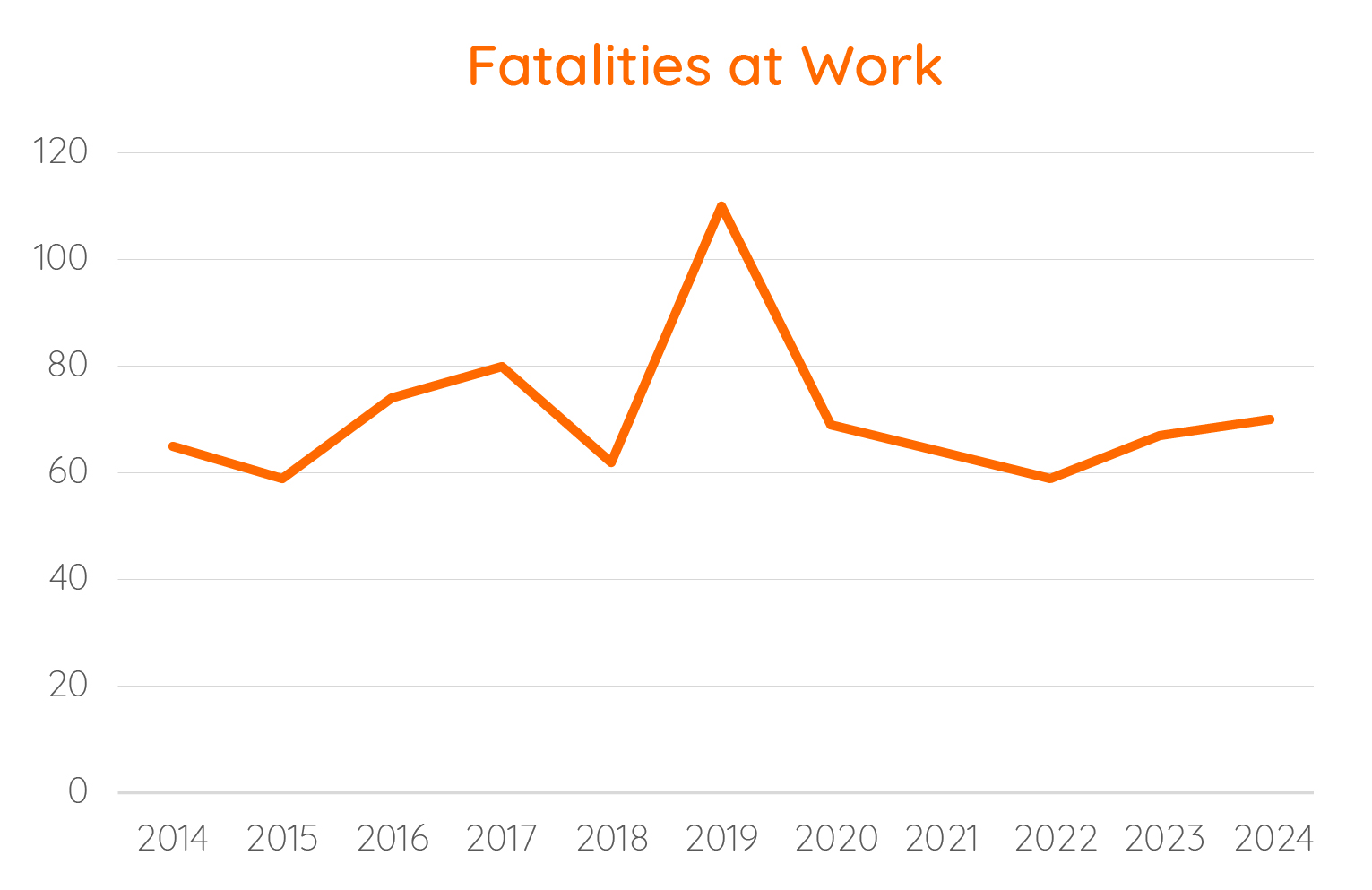
Aotearoa New Zealand loses a worker every week to workplace death and 17 more to work-related illness. Many of the workers most at risk, due to working in small businesses, insecure employment, and non-unionised workplaces, have the least access to health and safety representation.
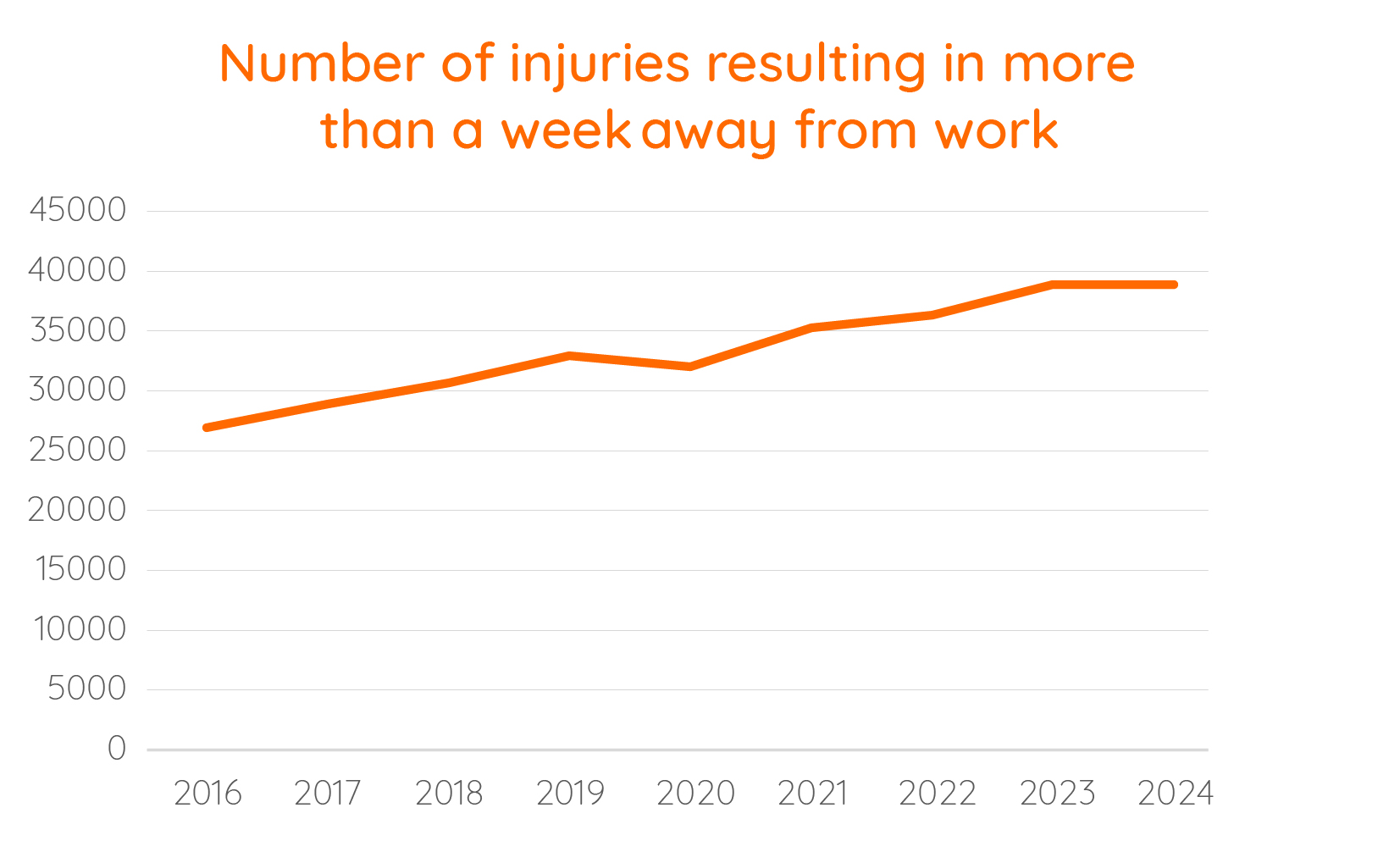
- New Zealand needs to do more to protect our workforce. Workplace fatalities, injuries, and illnesses remain unacceptably high.
- Union representation is a time-tested mechanism for driving better health and safety outcomes in workplaces.
- Many workers in New Zealand do not benefit from legislative health and safety engagement mechanisms or trade union representation because of the nature of their employment or the sector they work in.
- The answer to this gap in the health and safety system is to introduce union-based roving health and safety representatives that can support workers across a sector to engage in their workplace health and safety.
- Roving representative models are effective and ensure that workers have a voice in the design and operation of safe ways of working.
DOWNLOAD OUR ROVING HEALTH AND SAFETY REPRESENTATIVES POLICY
A Gap in Representation
New Zealand’s workplace health and safety record remains unacceptably poor. Conservative estimates put the economic cost of workplace injuries and deaths at $5.4 billion a year (Business Leaders’ Health and Safety Forum, 2025 State of Thriving Nation Report, 2025), yet the human cost is incalculable. Behind every statistic is a family that has lost a loved one, a community diminished, and a preventable tragedy.
Workplaces with union representation and formal structures for engaging and participating in workplace health and safety have far better outcomes.
The Health and Safety at Work Act 2015 (HSWA) encourages unions and employer organisations to take an active role in improving health and safety. It also includes mechanisms that enable fair and effective workplace representation, consultation, cooperation, and resolution of issues in relation to workplace health and safety.
New Zealand’s current framework for worker engagement, participation, and representation on workplace health and safety requires workers to request these mechanisms themselves. Where workplaces are unionised, those workers can rely on their union to support them to get their voice heard.
NOTE: Latest full data available.
The problem is that, in many cases, the workers who are most in need of representation are less likely to have it:
- Some sectors rely on forms of insecure labour – employment characterised by uncertainty or unpredictable hours, lower pay, and a lack of employment benefits.
- Others have workforces with high turnover, employ seasonally, or rely on migrant workers.
- Small businesses are less likely to resource workplace health and safety due to a combination of limited financial resources, time constraints on owners, and a lack of specialised expertise. Sectors with a high percentage of small businesses often have dispersed worksites where workers are isolated or find it difficult to collectively organise (Statistics NZ data shows that, as of February 2025, approximately 673,500 people were employed in a small business (fewer than 20 employees).
- These sectors are likely to have lower union density.
In these sectors, the legislative model for workplace engagement on health and safety is undermined by the employment structure. Workers in these environments are often more vulnerable and more exposed to the inherent imbalance of power in the employment relationship, meaning they are less likely to feel empowered to engage their employer on matters of health and safety.
In some instances, workers employed in these sectors are less likely to know their rights, and less able to advocate for improving health and safety outcomes.
The evidence shows that casual, temporary, seasonal, and labour hire workers experience higher rates of workplace injury and occupational illness compared to permanent employees and are significantly less likely to report harm or voice concerns for fear of losing future work (E. Underhill, Temporary Agency Workers and the Contribution of Workplace Unfamiliarity to Workplace Injuries, AIRAANZ 2007: Diverging Employment Relations Patterns in Australia and New Zealand, Conference Proceedings, University of Auckland, 2007).
NOTE: Latest full data available.
Union Representation Improves Health and Safety Outcomes
Trade unions are one of the most effective institutions for improving outcomes for working people. Research shows that unionised workers fare better than their non-unionised counterparts in terms of wages, conditions, job security, and worker voice. This relationship between union presence and improved worker outcomes reflects the importance of collective organisation in navigating the inherent imbalance of power between worker and employer.
The ‘union safety effect’ is well documented in occupational health and safety. Unions make safety information more accessible to workers; they provide a collective voice; they train representatives with the expertise and independence to identify hazards and hold employers to account; and they help establish formal health and safety structures such as committees, representatives, and reporting systems.
WorkSafe New Zealand’s own research confirms this: union presence in a workplace is associated with lower injury rates, more rigorous application of health and safety policies, and more effective forms of representation (WorkSafe NZ, Worker Engagement, Participation and Representation: Literature Review, 2018).
Research from the Trades Union Congress (TUC) – the trade union peak body in the United Kingdom – shows that union density is a key determinant of workplace psychosocial safety, not only physical injury rates. This means the union safety effect extends into the prevention of work-related stress, harassment, and mental harm. The TUC also finds that unionised workplaces with joint health and safety committees have injury rates approximately half those of comparable non-unionised workplaces (TUC, The Union Effect: How Unions Make a Difference on Health and Safety, 2016).
A final and underappreciated dimension of the union safety effect is its reach. As Bill Rosenberg notes, the safety benefits that flow from union presence are not confined to union members: reduced risk, better enforcement, and stronger safety culture benefit everyone in the workplace (W. Rosenberg, Unions as a Public Good, CTU Monthly Bulletin, 2019).
Union-Based Roving Health and Safety Representatives
Roving health and safety representatives (‘roving reps’) should be created to improve worker engagement in occupational health and safety in sectors characterised by insecure employment. A roving rep would be a trained, union-nominated official who operates across multiple worksites, typically within a defined geographic area and/or sector to assist workers with engagement, participation, and representation on matters of health and safety. The HSWA could be amended to create this new category of representative.
Roving reps are not intended to replace workplace health and safety representatives (HSRs); rather, they are there to support workers and build long-lasting internal capacity for good engagement and participation within the workplace.
Rather than being tied to a single employer, as HSRs are under the current legislation, roving reps would be able to reach the workers and workplaces that struggle to access proper engagement, participation, and representation.
A roving rep model would not impose any new duties on employers that do not already exist under the HSWA. Employers are already required to engage HSRs and allow access, cooperate with health and safety inspections, and address hazards when identified. The roving rep would simply extend the reach of these mechanisms into workplaces that struggle to activate them. For most employers, a roving rep would function as a practical resource, supporting them to understand their obligations and implement good practice to improve workplace health and safety.
What Roving Reps Would Do
To support these functions, roving reps would need legislative powers and functions:
- The relevant functions and powers of HSRs as per Part 1 of Schedule 2 of the HSWA to adequately support and represent workers within their coverage.
- Union representative rights under the Employment Relations Act 2000 to ensure that they can access a workplace within their coverage, and/or similar powers of entry and inspection as an inspector under the HSWA.
In addition to the basic functions of an HSR, a roving rep would also be able to:
- Provide training, support, and capability-building for workers in matters of worker engagement, representation, and participation.
- Assist both workers and the Person Conducting a Business or Undertaking (PCBU) to establish HSWA mechanisms of engagement such as electing HSRs, establishing health and safety committees, and supporting the negotiation of worker participation agreements.
- Work with employer bodies and industry groups to establish and support improved worker engagement, participation, and representation across the industry in support of best practice health and safety.
- Engage with WorkSafe in sector-specific work, and assist WorkSafe in its targeted actions, business support, and enforcement activities where appropriate.
Coverage, Requirements, and Appointment
Roving reps would be appointed by registered unions, to cover a sector across a defined geographic area. A union seeking to establish a roving rep would need at least one union member employed within a sector to show they cover workers in that sector or otherwise establish that their union represents the sector.
Another means of establishing grounds for the initiation of a roving rep would be a public interest test based on criteria such as high rates of harm or fatalities within a sector, or because specific health and safety issues are arising.
Roving reps would be required to complete the same approved unit standard for health and safety training as workplace HSRs. In addition to internal union training and sector-specific training, it would be beneficial for roving reps to also undertake WorkSafe inspector induction training.
Roving reps would be directly employed by the union, not by any PCBU, ensuring their independence. Like workplace HSRs, roving reps would serve a term of three years before being renewed by the appointing union.
Funding Model
Roving reps would be funded through the Working Safer Levy, and the ACC Work Levy. Where public interest arises, or through Ministerial discretion, sector-specific levies could also be implemented.
Unions would contribute to funding the roving rep role by providing employment location, support, training, and supervision.
Te Tiriti Alignment
Māori are disproportionately represented in high-harm industries such as agriculture and forestry. A roving rep model should include specific provision for kaupapa Māori approaches to health and safety engagement, and roving reps operating in sectors and regions with significant Māori workforces should have access to cultural competency training. Unions should be supported to partner with iwi and hapū in the design and deployment of the model, and Māori supported to take up roving rep roles.
How Roving Reps Differ from Workplace HSRs
Current HSRs are elected by workers within a single business or work group. They are employees of that business, which can, despite legal protections, create pressure not to escalate issues.
By contrast, roving reps would be nominated and employed by a union. They would be independent of any individual employer, bringing specialist expertise and the confidence to act without fear of employer sanction. As the Swedish experience (discussed below) confirms, this independence is precisely what is needed when demands for improvement are made.
Reported work-related injuries by region per 1,000 FTEs (2024) |
|
| Northland | 104 |
| Auckland | 67 |
| Waikato | 86 |
| Bay of Plenty | 87 |
| Gisborne/Hawke's Bay | 120 |
| Taranaki | 86 |
| Manawatū-Whanganui | 70 |
| Wellington | 54 |
| Tasman/Nelson/Marlborough/West Coast | 97 |
| Canterbury | 87 |
| Otago/Southland | 111 |
International Models
The roving rep is not an untested model. Sweden and Norway have legislated union safety representatives that cover SMEs effectively. The United Kingdom has successfully piloted a roving rep model and currently enables roving safety representatives in the creative sector to support performers across a scattered workforce.
In New Zealand, a recent pilot of voluntary roving reps in forestry established a good foundation to build upon and showed how this model can be effective in reaching workers in target sectors.
Country / Jurisdiction |
Model |
Legal Basis |
Key Features |
| Sweden | Regional Safety Representatives | Work Environment Act 1977 | Legislated for small worksites. Appointed by trade union with coverage. |
| Norway | Regional Safety Representatives (construction and the hotel, restaurant, and cleaning industries) | Regulations on Organization, Management and Participation 2011 | Mandatory scheme for registered businesses in these sectors; established by Norwegian authorities in cooperation with social partners. |
| United Kingdom | MU Roving Safety Representative Pilot |
Health and Safety at Work Act 1974 | Reps appointed by unions. Evidence of improved safety practices as a result of the pilot. |
| New Zealand | Toroawhi Pilot | Voluntary scheme across the forestry sector | Co-designed by unions, employer body, and regulator |
The Swedish Regional Safety Representative model
Sweden’s Regional Safety Representative (RSR) system is similar to the roving rep model proposed here and provides a strong evidence base in support. RSRs are appointed by trade unions and work almost exclusively with small and medium-sized enterprises. This system enables small businesses to participate in health and safety improvements that they could not sustain on their own, and it activates worker engagement at the local level. The scheme is predominately government funded.
In 2009, the 1,185 RSRs representing trade unions affiliated to the Swedish Trade Union Confederation made over 74,000 workplace visits, affecting the health and safety activity of 273,757 workplaces. By comparison, only 30,000 workplace inspection visits were made by the Swedish Work Environment Authority in the same year (ETUI, Sweden: Regional Safety Representatives: A Model that is Unique in Europe, 2011).
The UK Workplace Safety Representative Pilot
A pilot based on the Swedish model was undertaken in the United Kingdom in 2002. The evaluation of the pilot commissioned by the Health and Safety Executive (the primary health and safety regulator in the UK) was extremely positive about the impact of the scheme. As reported by the TUC, “It found more than 75% of employers involved said that they had made changes in their approach to health and safety as a result of the pilot, including revising or introducing new policies and procedures, regular health and safety discussions with staff, and risk assessments. The pilot also led to the creation of safety committees in some workplaces and joint working on risk assessments and training” (TUC, Safety Representatives: Getting More than the Minimum, 2018).
New Zealand Toroawhi Forestry Pilot
New Zealand already has its own proof of concept for the roving rep model, the Toroawhi Forestry Representative Pilot. This pilot was jointly designed by WorkSafe, the Forest Industry Safety Council, and Workers First Union. It deployed two roving representatives into the forestry sector to strengthen worker engagement and representation across dispersed, high-risk crews where conventional health and safety structures had failed to reach.
The programme engaged over 500 workers across the central North Island and Gisborne/Tairāwhiti regions, and an independent evaluation cited in the ACC–WorkSafe Harm Reduction Action Plan 2022 found that the Toroawhi became trusted advisers in their regions, supporting a measurable shift in mindsets so that workers felt more confident speaking up on health and safety issues, particularly around wellbeing.
It demonstrated that a worker-centric model is adaptive to the needs of the workforce rather than a rigid application of health and safety systems. It also showed the importance of being Tiriti aligned by engaging with hapū and iwi, developing a kaupapa Māori approach to worker engagement, and ensuring visible Māori leadership within the sector.
Overall, this pilot showed the importance of models that engage workers at the site level. Critical lessons from the pilot are the need for roving representatives to have independence from the regulator (WorkSafe New Zealand), and that accessing remote and moving workplaces needs to be bolstered, especially where businesses are unwilling to engage in a voluntary system. Our proposal addresses these issues by being based in unions, and entrenching rights, functions, and powers in legislation.
REIMAGINING AOTEAROA TOGETHER RECOMMENDATION
Amend the Health and Safety at Work Act 2015 to create a new statutory category of the Roving Health and Safety Representative, nominated by registered unions, with full HSR powers and union representative rights of access across a defined sector or geographic area. Establish a co-funded government–union programme, modelled on the Swedish Regional Safety Representative system, to deploy roving reps into New Zealand’s highest-harm, lowest-representation sectors.